Explore practical insights, ideas and strategies covering web development, design, SEO, e-commerce and modern digital technology.
Web DevelopmentUI/UXSEOE-CommerceTechnologyBusiness
WEB DEVELOPMENT
How a High-Performance Website Can Change the Way Your Business Grows
A modern website is more than an online presence. Performance, user experience, search visibility and conversion-focused design can directly influence how customers discover and interact with your business.
8 min read August 2026
No articles found.
Try another keyword or browse all categories.
WEB DEVELOPMENT
Why Your Business Needs More Than Just a Website
A website should work as a digital business tool. Learn how performance, structure, content and user experience can turn a website into a stronger customer acquisition channel.
For many businesses, launching a website is treated as a final destination. You get a domain, set up a few pages, and wait for customers to arrive. But the digital landscape is far too competitive for that passive approach to work today.
A modern website is not an online brochure; it is a digital business tool. It is the central hub of your marketing, sales, and customer service efforts. To truly leverage the web, your site needs to be built with intention.
Beyond Basic Information
While an "About Us" and "Contact" page are essential, they aren't enough. Your website needs to guide the user naturally through a journey—answering their questions, addressing their pain points, and gently leading them toward a conversion point. This requires strategic content structuring.
Performance and User Experience
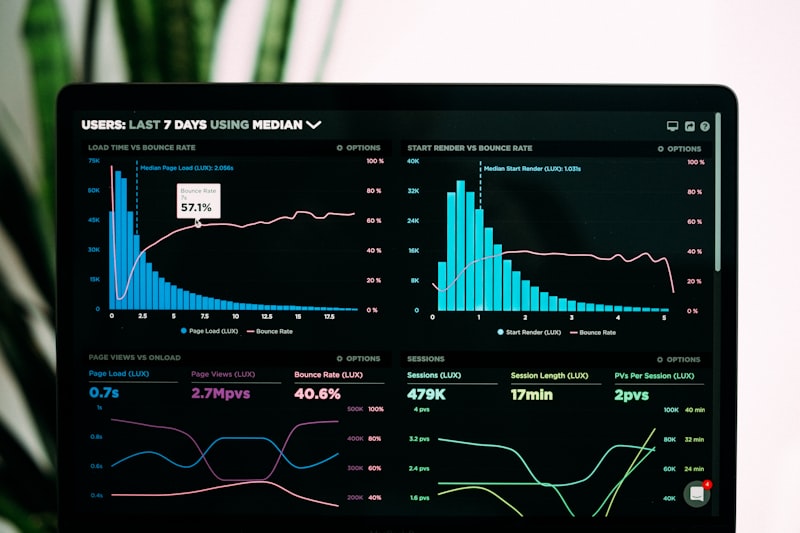
A slow website actively damages your brand. Users expect pages to load in under two seconds. If your site takes longer, they will leave, and search engines will penalize your rankings. Performance optimization isn't just a technical concern; it is a core business requirement.
Optimize images and compress assets to reduce load times.
Ensure mobile responsiveness is prioritized, as most users browse on phones.
Minimize intrusive pop-ups that disrupt the user's reading flow.
Conversion-Focused Design
Every element on your website should serve a purpose. From the color of your call-to-action buttons to the placement of your contact forms, design choices should be driven by data and user behavior, not just aesthetics.
When you build a website that works for your business—rather than just looking nice—you transform it from an expense into an investment that generates measurable returns.
SEO
Local SEO for Businesses in Erode and Tamil Nadu
Learn how location-focused content, technical SEO, useful service pages and a strong local presence can help businesses become more visible to customers searching online.
Search engine optimization (SEO) often feels like a massive, global competition. But for local businesses in Tamil Nadu, the most valuable traffic isn't global—it's right in your neighborhood. Local SEO focuses on optimizing your online presence to attract business from local searches on Google and other search engines.
If someone in Erode searches for "best website development company" or "reliable digital services," you want to be at the top of that map pack. Achieving that requires a specific, location-based strategy.
Optimize for Local Intent
Search engines use complex algorithms to determine which businesses are most relevant to a local query. They look at relevance, distance, and prominence. To improve your relevance, you need content that explicitly connects your services to your location.
Include location-specific keywords naturally in your service pages (e.g., "Web Development in Erode").
Create blog posts discussing local market trends or community involvement.
Ensure your name, address, and phone number are consistent across all web directories.
Technical Foundation
Local SEO isn't just about keywords. It's about technical health. Search engines must be able to crawl your site efficiently. This means having a clean URL structure, fast loading speeds, and mobile-first design. A technically sound website is the foundation upon which local visibility is built.
By focusing on local search visibility, you ensure that when a customer in Tamil Nadu is ready to buy, your business is the one they find first.
UI/UX
5 Principles of Better Website User Experience
Good design is not only about appearance. Explore five practical principles that help make websites easier to understand, navigate and use.
It is easy to confuse a beautiful website with a functional one. While aesthetics matter, they should never come at the expense of usability. User Experience (UX) and User Interface (UI) design are about creating digital environments that are intuitive, efficient, and enjoyable to use.
Here are five core principles that separate good design from bad design:
1. Clarity Over Cleverness
Users shouldn't have to think too hard to figure out how to navigate your site. Avoid obscure icons or overly minimalist text. If a button says "Submit," change it to something more specific like "Send Message." Clear language reduces friction.
2. Consistency is Key
Your buttons, fonts, and colors should follow a strict pattern throughout the site. If your primary call-to-action is blue on the homepage, it should be blue on the contact page. Consistency builds muscle memory and trust.
3. Visual Hierarchy
Not all information is equally important. Use size, color, and spacing to guide the user's eye to the most critical elements first. A large, bold heading naturally draws attention before smaller body text.
4. Embrace White Space
White space (or negative space) is not wasted space. It gives elements room to breathe, making the interface look cleaner and less overwhelming. It improves readability and focuses attention.
5. Design for Accessibility
A great UX is inclusive. Ensure your color contrast is high enough for visually impaired users. Use descriptive alt text for images. Make sure your site can be navigated entirely via keyboard for users who cannot use a mouse.
By prioritizing the user, you build a website that doesn't just look good, but works beautifully.
E-COMMERCE
What Makes an E-Commerce Website Convert Visitors into Customers?
From product discovery to checkout, every part of an e-commerce experience affects customer decisions. Explore the fundamentals of a conversion-focused online store.
Driving traffic to an online store is only half the battle. The real challenge lies in converting that traffic into paying customers. A high-converting e-commerce website is a carefully engineered machine where every component plays a role.
Frictionless Product Discovery
Your search and category filters are the sales assistants of your digital store. If users can't find what they are looking for in seconds, they will leave. Implement smart search with auto-suggest, and allow filtering by multiple attributes (size, color, price, etc.).
High-Quality Visuals
Since customers cannot touch the product, images are their only reference. Low-quality images destroy trust. Use high-resolution photos, multiple angles, and if possible, video demonstrations of the product in use.
The Checkout Process
This is where most e-commerce sites fail. A long, complicated checkout process is the number one cause of cart abandonment. To optimize conversions:
Off-the-shelf software solutions are great for startups and small teams. They handle standard processes like accounting, email marketing, and basic CRM. But as a business grows, these disconnected tools can become a bottleneck, leading to inefficiency and data silos.
So, when is the right time to invest in custom software?
1. When Your Process is Unique
If your business model relies on a specific workflow that no generic software supports, custom development is the answer. Trying to force a unique process into a rigid tool leads to workarounds, which are prone to error.
2. When You Are Drowning in Tools
If your team is copying data from three different apps into a spreadsheet just to generate a report, you have an integration problem. Custom software can act as a central hub, automating data flow between departments and providing a single source of truth.
3. When Security and Compliance are Critical
Generic cloud tools may not meet the strict data privacy requirements of certain industries. Building your own application gives you total control over data architecture, security protocols, and compliance.
4. When You Want to Scale
Custom software is built specifically for your load. It scales with you, ensuring that as your customer base or team grows, the software doesn't break under the pressure of generic limitations.
While the initial investment is higher, custom software pays off by streamlining operations, reducing manual labor, and giving you a technological edge over competitors using standard tools.
DIGITAL TRENDS
The Future of Interactive Web Experiences
Interactive design, motion, 3D technologies and immersive interfaces are changing how brands communicate online. Explore where modern web experiences are heading.
The web has historically been a two-dimensional medium. Text, images, and video arranged on a flat canvas. But as browser capabilities expand and devices become more powerful, the line between web pages and native applications is blurring.
The future of the web is interactive, spatial, and immersive.
Beyond Flat Design
Users no longer want to just read content; they want to interact with it. Micro-interactions, scroll-triggered animations, and dynamic data visualizations make a website feel alive. These elements guide the user's attention and make the experience memorable.
The Rise of 3D and WebGL
Frameworks like Three.js and WebGL are making it possible to render complex 3D graphics directly in the browser without plugins. From 3D product configurators to immersive landing pages, brands are using 3D to create a "wow" factor that drives engagement.
Performance is Still King
While heavy animations and 3D elements look incredible, they must be implemented with performance in mind. A beautiful site that takes 10 seconds to load will lose users before they even see the interaction. Techniques like lazy loading, optimized geometry, and efficient shader programming are essential.
Spatial Computing
As AR and VR headsets become more mainstream, web standards are adapting to support spatial layouts. Soon, we won't just be designing for screens, but for the physical space around the user.
Brands that embrace these interactive technologies now will be the ones setting the standard for digital experiences in the future.
STAY IN THE ORBIT
Get useful digital insights in your inbox.
Occasional insights about websites, technology, design, SEO and digital growth. No unnecessary noise.
WHY WEBLYNIX ORBIT
Practical ideas for a rapidly changing digital world.
01
Practical
Actionable information that businesses can actually use.
02
Technology
Explore modern web technologies and digital product ideas.
03
Business Focused
Connect technology decisions with real business goals.
04
Human First
Write for people first, not search engines.
READY TO BUILD?
Have an idea beyond the ordinary?
If you're planning a website, e-commerce platform, custom application or digital experience, let's turn the idea into something real.